Keynote
Speakers
.
|
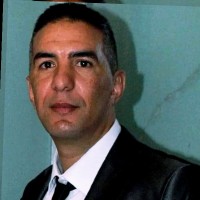
Prof. Fateh Mebarek-Oudina
Department of Physics, Faculty of
Sciences, University of 20 Août 1955-Skikda, Route
El-Hadaeik, B.P. 26, Skikda 21000, Algeria.
Professor Dr. Fateh
Mebarek-Oudina is an internationally recognized expert
in fluid dynamics and energy systems, with an H-index of
64 and over 170 publications in leading scientific
journals. He serves on the editorial boards of several
indexed journals and has reviewed for more than 300
international publications. Ranked among Stanford
University’s Top 2% Scientists (2020–2025) for his
scientific impact. Holding a Ph.D. since 2010, he began
his career as a process engineer at SONATRACH and now
serves as a professor at Skikda University, Algeria. His
research focuses on nanofluids, clean energy,
combustion, and MHD stability—key areas driving
advancements in mechanical, energy, and material
engineering.
|
Keynote
lecture title: Advances in Phase Change Materials
and Nano-Enhanced Phase. Change Materials for
Next-Generation Thermal Energy Storage
Abstract: Phase Change Materials (PCMs) and their
engineered nano-enhanced counterparts (NePCMs) are at
the forefront of thermal energy storage research,
offering transformative potential for renewable energy
systems. Through controlled phase transitions, PCMs
deliver high energy density and reversible heat
transfer, enabling improved energy capture, storage, and
dispatchability in solar technologies, thermal
management, and energy-efficient climate control
systems. This presentation surveys recent progress in
the thermo-physical properties, heat transfer
mechanisms, and integration strategies of NePCMs,
highlighting their superior thermal performance and
multifunctional capabilities. Key challenges—such as
material stability, compatibility, and cost—are
examined alongside emerging solutions and innovative
application pathways. The talk emphasizes
multidisciplinary approaches and evolving trends that
position PCM and NePCM technologies as critical enablers
of a sustainable, low-carbon energy future. Researchers,
doctoral candidates, and energy professionals are
encouraged to explore these developments and their
implications for next-generation renewable energy
infrastructures.
Keywords: Phase
Change Materials (PCMs); Nano-Enhanced Phase Change
Materials (NePCMs); Thermal Energy Storage; Heat
Transfer Enhancement; Renewable Energy Systems; Energy
Dispatchability; Solar Thermal Management; Sustainable
Energy Technologies.
|
|
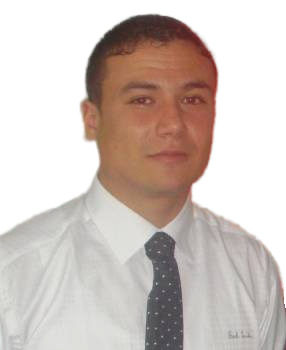
Dr. Taqiy Eddine Boukelia
Laboratory of Mechanical
Engineering, Jijel University, Algeria.
Dr. Taqiy Eddine
Boukelia, an Associate Professor of Mechanical
Engineering at the University of Jijel, holds Master's
(2011) and Doctorate (2016) degrees from the University
of Constantine. His expertise includes renewable energy,
energy conversion and management, AI applications in
energy systems, and hydrogen production. With over 70
authored and co-authored papers in journals and
conferences, he also contributes as an editorial board
member for prestigious publications like Scientific
Reports (Spinger nature) and Energy Engineering
(Elsevier), etc. Dr. Boukelia is a regular reviewer for
leading journals such as Applied Energy and Energy
Conversion and Management, etc., and has received
severals awards, including the Outstanding Scientific
Production in Renewable Energy Award.
|
|
Keynote
lecture title: Integration of Waste Heat Recovery
Systems into Concentrating Solar Power (CSP) Plants
Abstract: Concentrating Solar Power (CSP) plants,
particularly those employing steam Rankine cycles for
large-scale electricity generation, are significantly
suffering from the large amount of waste heat rejected
during the cooling process. Thus, integrating Waste Heat
Recovery (WHR) systems presents a promising solution,
allowing for the capture of this heat and the
enhancement of dispatch capacity through power
generation at two different temperature levels:
high-temperature from the topping power block and
low-temperature from a bottoming WHR unit. Consequently,
this presentation aims to comprehensively discuss and
assess the techno-economic and environmental
performances resulting from the integration of an
Organic Rankine Cycle (ORC)-based WHR system into four
diverse CSP plant layouts. These configurations are
further augmented with a Thermal Energy Storage System
(TESS) and a Fuel Backup System (FBS). The core
motivations for incorporating these combined systems are
to significantly elevate dispatch capacity, effectively
mitigate economic risks, and notably decrease water
consumption crucial for the cooling processes of these
installations.
Keywords:
Concentrating Solar Power, Dispatch Capacity,
Techno-Economic Performance, Waste Heat Recovery, Water
Consumption.
|
|
.
|
Dr. Mahdi Abdeddaim
Laboratoire de Recherche en Génie
Civil, Hydraulique, Développement durable et
Environnement, Dept. of Civil Engineering and
Hydraulics, Faculty of Sciences and Technology, Mohamed
Khider Univ., BP 145 RP, Biskra 07000, Algeria.
Dr. Mahdi Abdeddaim is
an Associate Professor (Rank A) of Civil Engineering at
Biskra University, Algeria, specializing in structural
engineering with focus on seismic-induced vibration
control using various devices. He earned his PhD from
Biskra University in 2017 and has published over 20
research papers in reputed journals while serving as
editor for publications by ASCE and Elsevier. Dr.
Abdeddaim teaches courses in structural dynamics, waves
and vibration, and research methodology. He is currently
co-supervising PhD research on AI applications in
seismic control and collaborates with universities in
Bulgaria, Ireland, and Italy on international research
projects.
|
Keynote
lecture title: AI Applications for Structural
problems in Mechanical and Civil Engineering
Abstract: This presentation examines how
artificial intelligence and big data analytics are
redefining the way we address complex real-world
problems, with an emphasis on dynamic systems that
demand intelligent, adaptive control. In a world
increasingly shaped by vast and intricate data flows,
transforming raw information into practical, data-driven
insights stands as a key objective across many
scientific and technical fields. The session opens with
an overview of essential big data principles, analytical
techniques, and AI frameworks presented in an accessible
manner for researchers from diverse disciplines. It then
explores the added value of these computational
approaches across multiple domains, leading to their
implementation in physical systems—most notably in
controlling unwanted vibrations, a pervasive issue
encountered in sectors ranging from mechanical
engineering to civil engineering applications. To anchor
these ideas, the presentation features a case study on
an AI-based control system engineered to safeguard
structures under external loadings. This example
highlights how machine learning models can interpret
complex environmental data to deliver adaptive,
real-time responses—an approach readily applicable to
many other contexts. The seminar concludes with
reflections on the challenges of integrating AI in
practical systems, including technical constraints,
ethical implications, and evolving research
trajectories. It also emphasizes the potential for
interdisciplinary cooperation and aims to inspire
participants to explore innovative uses of AI and data
analytics within their own fields.
Keywords:
Artificial intelligence, Dynamic systems, Machine
learning, Structural safety, External loadings.
|
|
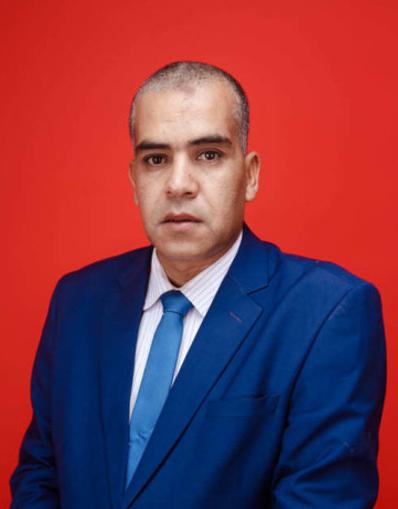
Dr. Abderrahmane Noui
Center for Scientific and
Technical Research on Arid Regions, CRSTRA, BP 1640,
Biskra, Algeria
Dr. Abderrahmane Noui holds a Ph.D. in Hydraulic
Sciences from the University of Biskra and serves as a
researcher at the Scientific and Technical Research
Center on Arid Regions (CRSTRA). He is also the founder
and director of a consulting office specialized in
geophysics applied to groundwater exploration and
management. Winner of the Second Prize of the “AI for
Environmental E-government Award” at the World Summit
on the Information Society (WSIS, Geneva 2025), he
develops innovative solutions that integrate artificial
intelligence for sustainable water resources management.
His career is marked by several national and
international distinctions in the field of sustainable
development, including in Austria, Turkey, Iran, Egypt,
and Russia.
https://sdgs.un.org/partnerships/contribution-artificial-intelligence-geophysics-gis-and-ict-fight-against-groundwater
|
|
Keynote
lecture title: Artificial Intelligence for
Sustainable Groundwater Management: From Local
Innovation to International Recognition
Abstract: This keynote will present the journey
behind the development of an innovative digital platform
for monitoring and managing several dozen groundwater
aquifers in the arid regions of Algeria, recognized with
the Second Prize at WSIS 2025 in Geneva. The project
demonstrates how integrating artificial intelligence and
predictive analytics can optimize the management of over
10 million m³ of groundwater annually. The talk will
also share my personal experience in receiving national
and international distinctions, highlighting the
strategies that enabled the mobilization of a team of 15
researchers and students. The objective is to promote
transdisciplinary and innovative approaches for
sustainable water resource management, inspire young
researchers to actively participate in scientific
competitions, and show that the fields covered by the
2nd Conference on Mechanical, Energy, and Material
Engineering also offer real opportunities to win
international awards through the engagement and
creativity of students and researchers.
Keywords:
Artificial intelligence; Groundwater resources;
Sustainable management; Scientific innovation;
International competitions; Engineering
|
|
|
(Last updated on November 06, 2025)
|